

The Fear of Being Seen Has a Name & It's Older Than the Internet

Most people, when they feel a pulling-back at the moment of visibility, assume it is about confidence. That they need to believe in themselves more, care less about what other people think, develop a thicker skin. And then they try all of those things and still find themselves hesitating at the edge of being seen, still finding reasons not to post, not to speak up, not to put the thing out into the world.
The fear of being seen is not a confidence problem. It is a body-level response to something much older and much deeper. And until you understand what it actually is, no amount of mindset work is going to shift it at the root.
What Happens in the Body When You Go to Be Seen
You know the moment. You are about to do something visible. Press publish. Send the email. Stand up in the room. Film the video. Say the thing out loud that you have been thinking quietly for a long time.
And something happens. Not in your mind first. In your body. A tightening in the chest. A heat in the face. A sudden awareness of all the ways this could go wrong. The memory of every time something like this did not go the way you hoped. A pulling-back, subtle but insistent, that generates a series of entirely reasonable-seeming reasons why now is not the time, or this version is not quite right, or you just need a little more preparation before you are ready.
This is a stress response. Not a philosophical position about whether you are ready. Not an accurate assessment of your capabilities. A threat response in the nervous system that is treating visibility as danger.
Where does that come from?
The Witch Wound

In many circles, this is called the witch wound. The ancestral memory, carried in the body and passed through the lineage, of what it cost women to be visible, to be vocal, to be powerful, to be different. The women who were marked out as threats because of what they knew, what they felt, what they said. The long history of women being silenced, punished, excluded for the very things that made them extraordinary.
You do not have to take this literally to feel the truth of it. Whether you understand it as ancestral trauma, collective conditioning, or simply the cumulative effect of generations of women being taught in various ways to be smaller, quieter, less, the lived result is the same. A deep, body-level wariness about what happens when you are fully seen. A quiet knowing, older than your own experience, that visibility can be dangerous, and that the safest move is often to stay small.
You see it everywhere once you start looking. In the way women preemptively apologise before they share an opinion. In the hedging and the qualifying and the making-yourself-smaller even when what you have to say is genuinely worth hearing. In the compulsive second-guessing after any act of self-expression, the internal audit of whether you said too much, whether you came across wrong, whether you gave anyone cause to think less of you.
This is not drama. This is a very old, very understandable protective response operating in a world where the original threat no longer exists in its original form, but the nervous system does not quite know that yet.
The Particular Texture of Online Visibility
The internet has not invented the fear of being seen. But it has provided it with a specific new arena in which to play out, and one that the nervous system is not remotely evolved to handle.
Because the comment section is real. The misreadings are real. The people who will take the most innocent thing you say and make it into something it was not, they genuinely exist. And this means that the protective part of you, the part that is watching for danger, is not entirely wrong to be paying attention. There is something to be cautious about. The question is whether the caution is calibrated to the actual level of risk, or whether it is operating on a setting designed for a much more dangerous world than the one you are actually in.
For most women, the online vigilance is wildly overcalibrated. The catastrophic scenario the nervous system is guarding against, the public humiliation, the complete rejection, the total loss of credibility, is almost never what happens. What usually happens is much more mundane. Some people respond warmly. Some people do not engage. Occasionally someone says something unkind. And then it passes, and the world continues, and the catastrophe that the nervous system was bracing for never quite arrives.
But the protective part does not update easily based on this evidence. It takes sustained, repeated experience to shift it. And that experience can only be gathered by showing up anyway, imperfectly, while the fear is still present.
Why Staying Invisible Also Has a Cost
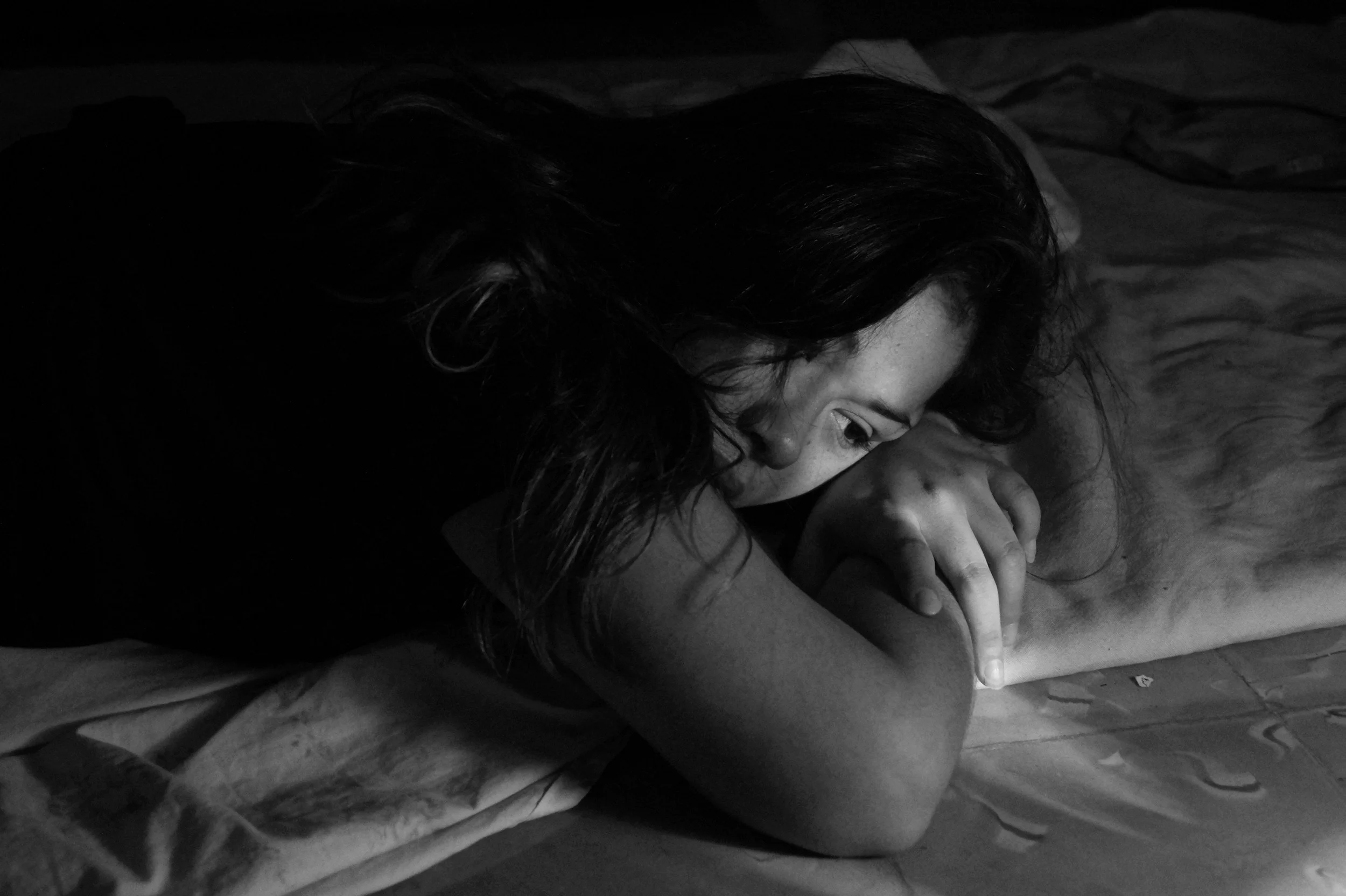
The choice is not between perfect safety and reckless exposure. There is no perfect safety available, and recklessness is not required. The choice is between the risk of being seen and the cost of remaining invisible. And that cost is real too.
It is the slow, grinding cost of not using your voice. Of having something to say and keeping it to yourself because the fear of how it will be received is greater than the pull of saying it. Of watching other people be out in the world with their ideas and their presence and their imperfection, and feeling the quiet ache of what is unexpressed in you.
It is the cost to the people who would have been reached by what you have to offer. Who would have found something they needed in the thing you were too afraid to share. Who would have felt less alone in their particular experience if they had heard yours. They did not find it, not because it was not valuable, but because the fear kept it inside.
This is not meant to induce guilt. It is meant to make the cost of staying invisible as visible as the cost of showing up. Both are real. Both have to be weighed. And for most people who sit with it honestly, the cost of the unexpressed life is higher than the cost of the occasional uncomfortable response.
Working With the Fear Rather Than Against It
The instinct, when you notice this fear, is to try to argue yourself out of it. To tell yourself it is not rational. That the comment section is mostly fine. That most people are not out there looking for reasons to dislike you. That even if they were, you would survive it.
All of that is true. And none of it works at the level where the fear lives, which is in the body, not in the logical mind.
What works is slower and requires more patience. It is the practice of showing up, imperfectly, in small increments, and surviving it. Recording the video and not posting it, just to break down the wall of not having done it before. Then recording it and posting it. Saying the thing in a lower-stakes room first. Sharing a vulnerable thought with one person. Letting someone disagree with you without immediately backpedalling or apologising.
Each of these moments teaches the nervous system something that logic alone cannot: that being seen does not kill you. That you can be imperfect in public and the world continues. That your voice, out in the world, creates connection rather than destruction.
It is not a quick process. The fear has been in the body for a long time, reinforced by culture and by its own self-protective logic. But it does move. Slowly, with repetition, with self-compassion, and with the willingness to keep going even when it still feels uncomfortable.
The Practice of Authentic Self-Expression
Something that is worth noting about the fear of being seen is that it tends to be proportional to the authenticity of the expression. The more you are being genuinely yourself, the more the risk feels real. The more you are performing, managing, giving people a curated and safe version of yourself, the less frightening it is, because there is less of you actually at stake.
This is why the polished version of yourself online often feels easier to show up with than the real one. The polished version can handle criticism because it is not really you. But it is also not connecting with anyone, not really, because people can feel the distance between the performance and the person.
The real self, the opinionated, imperfect, still-figuring-it-out, having-a-hard-week version of yourself, is the version that creates genuine resonance. It is the version that makes someone feel less alone. It is the version that builds the kind of audience or community that actually matters.
That version requires the most courage to show. And it is also the one that is most worth showing.
You Are Allowed to Be Seen
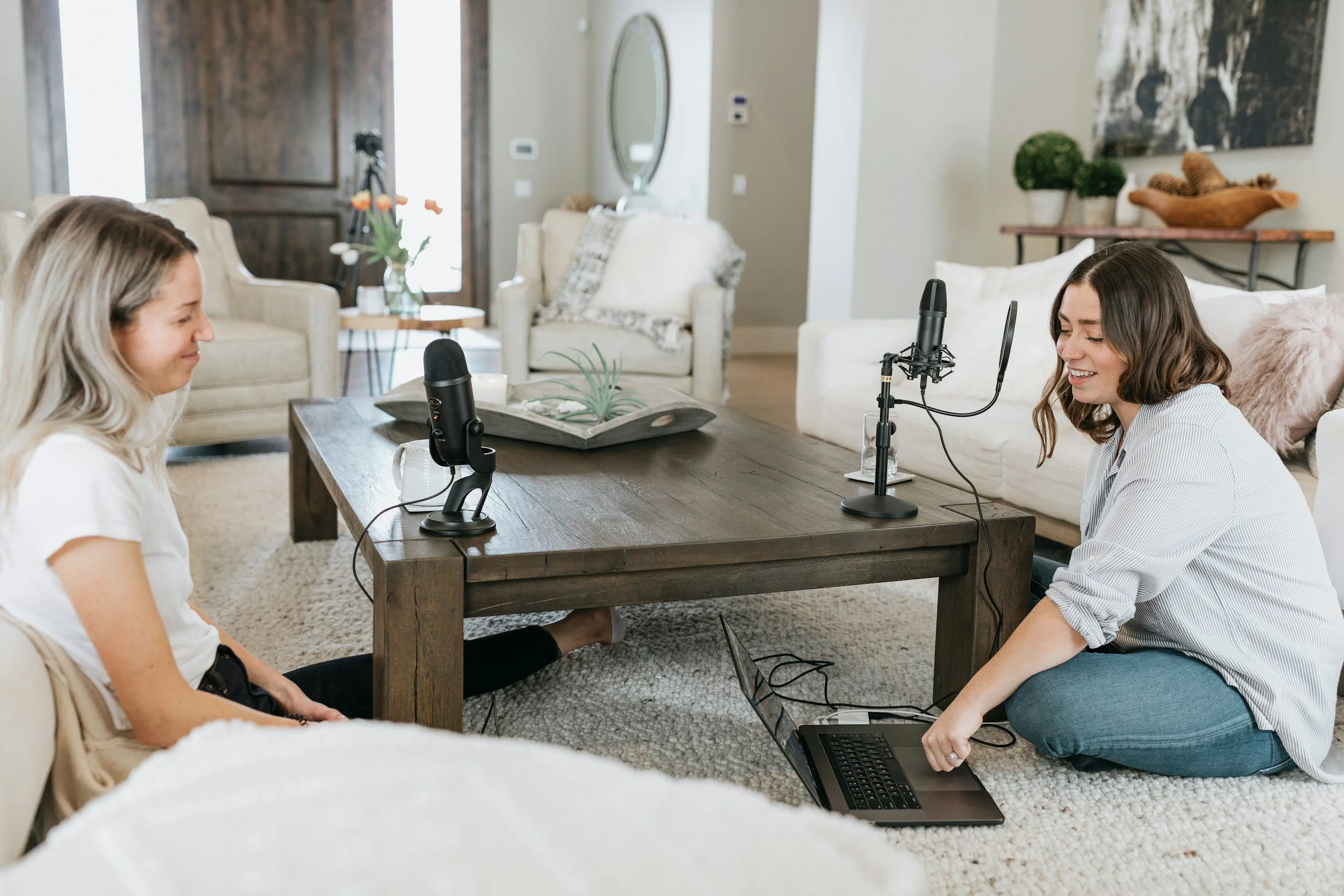
There is a version of your life where you are not editing yourself down to what feels safest. Where the thing you are building is being built out in the open, imperfectly, in real time, with all its rough edges showing. Where your voice is being used for what it is actually for.
That version is not available to the unshakeably confident. It is available to the ones who show up afraid, and do it anyway, and discover through the doing that the fear was never as all-powerful as it presented itself to be.
You are not too much. The thing you have to say is not going to break anything. The imperfect version of you that shows up before you feel ready is more valuable to the people who need what you have than the perfect version you are waiting to become.
The fear of being seen is real. But so is the cost of staying invisible. Pay attention to which one you are actually most afraid of living with.
What Becomes Possible When You Stop Hiding
It is worth spending a moment on the other side of this. Not the fear, not the wound, not the protective mechanism and its origins. The other side. What becomes possible when the fear of being seen is no longer the thing running the show.
There is a particular kind of freedom that comes from having been visible and survived it. From having said the real thing and not been destroyed. From having shown up imperfectly in public and discovered that the catastrophe the nervous system was certain would follow simply did not arrive. The first time the adrenaline passes without disaster, something begins to shift. Not everything at once. But something real, something that was not there before.
Women who have done this work describe a particular quality of aliveness on the other side of it. A sense of no longer managing themselves against the world. A capacity for presence that was not possible when so much energy was going into the project of staying safe. A quality of connection with other people, because when you are genuinely seen, you get to see back, and the kind of relating that becomes possible in that space is different from anything available in the more guarded version of yourself.
The visibility also compounds. Each time you show up and nothing terrible happens, the nervous system takes note. The baseline for what feels tolerable shifts slightly upward. The next act of visibility is marginally less frightening. Over time, the thing that felt impossible becomes the thing you just do. Not without nerves, not without the occasional internal audit of whether you should have said it slightly differently. But without the paralysis that once accompanied even the smallest act of self-expression.
You will still feel the fear sometimes. That is not the goal, eliminating it. The goal is a relationship with the fear where it is no longer the one making the decisions. Where it gets to exist, noted and acknowledged, while you press publish anyway. While you say the true thing anyway. While you take up the space that is yours anyway.
That relationship is built one act of imperfect visibility at a time. It is entirely available to you. And it is worth everything it takes to get there.
If you want support working through the fear at the body level, a Decoded session can be a useful starting point — looking at your Human Design and astrology chart to understand how your particular design interacts with visibility, expression, and the fear of being seen. Book at lbaldwin.com/decodedsession.
