

Why You Keep Procrastinating on Your Goals (It's Not Laziness, It's Your Nervous System)
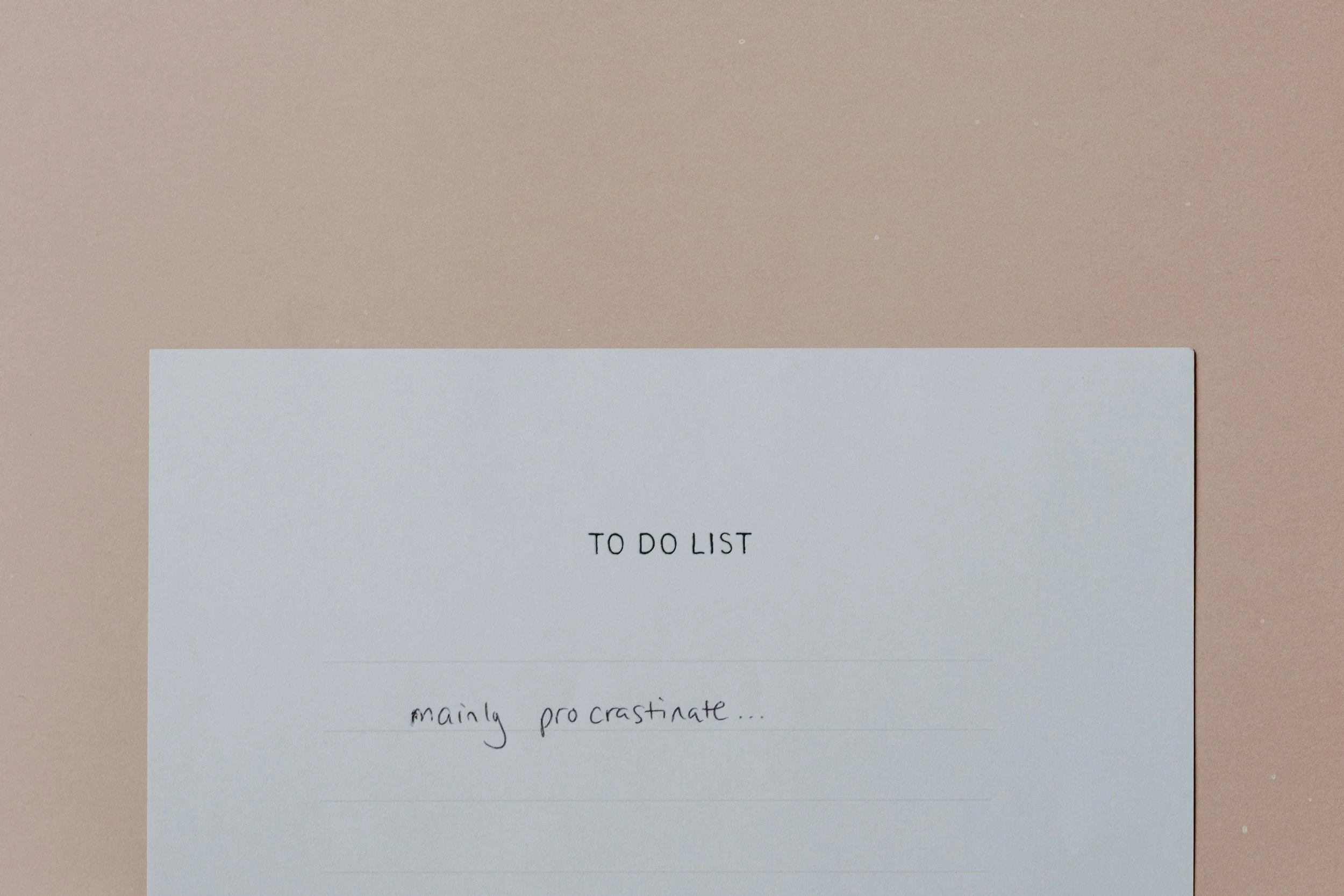
Procrastination is a nervous system response
If you have been putting something off for weeks, months, maybe a year or more, and you still cannot quite explain why, this is worth reading. Not because it will give you a five-step productivity hack. But because the real reason you keep procrastinating on your goals has almost nothing to do with willpower, laziness, or not wanting it badly enough.
It has everything to do with your nervous system. And your nervous system, it turns out, is very good at keeping you exactly where you are.
The Story You Tell Yourself Is Not the Whole Story
There is a certain kind of procrastination that is easy to identify. You put off the dentist, the tax return, the email you have been avoiding. That is avoidance with a face on it. You know what it is, you know why you are doing it, and eventually you do it.
But then there is another kind. The kind where you put off the thing that actually matters to you. The thing you genuinely want. The business, the creative project, the conversation that would change everything, the first episode of the podcast you have been meaning to start for two years. That one is harder to name because it does not feel like procrastination from the inside. It feels like waiting for the right time. Or gathering more information. Or sorting out your space first, or getting yourself together a bit more, or just getting through this busy period.
And so the weeks pass.
The problem with calling it laziness, or fear, or even imposter syndrome, which is a real thing but has become a catch-all explanation that does not actually help you move, is that none of those framings give you a way through. Laziness implies a character flaw. Fear implies you need to get braver. Imposter syndrome implies you need to feel more confident before you begin. None of that is actually true, and none of it tells you what to do.
What is true is that your nervous system has registered this goal, this dream, this next step as a potential threat. Not because it is dangerous. But because it is new. And new, to the nervous system, looks a lot like danger.
What the Nervous System Actually Does When You Try to Move Forward
Your nervous system is not concerned with your goals. It is concerned with your survival. That is not a criticism, it is a function. The part of your brain that watches for threat responses does not distinguish between a lion in the grass and the act of pressing record on a camera for the first time. Both involve the unknown. Both involve exposure. Both trigger a version of the stress response.
So when you move towards something that is genuinely important to you, something that would require you to put yourself out there, to be seen, to risk failure or judgment, your nervous system does exactly what it was designed to do. It slows you down. It raises the alarm. It sends up reasons why now is not the right time.
Those reasons will feel completely legitimate. And many of them will even be partially true. The timing is a bit off. The setup is not quite right. You do not know enough yet. You are tired. There is something else that needs doing first.
That is not your mind lying to you. That is your nervous system doing its job, which is to protect you from the discomfort of the unknown by keeping you in the familiar.
The stuck place is familiar. The familiar, to the body, feels safe. Even when it is not making you happy, even when staying in it costs you something real every single month that passes, the body will consistently choose the familiar discomfort over the unfamiliar unknown.
This is one of the most important things to understand about procrastination: it is not a moral failing. It is a nervous system response. And nervous system responses do not respond to shame or to forcing. They respond to something gentler, and a lot more patient.
The Difference Between Bad Timing and Nervous System Noise

This is nuanced, and it matters, so stay with it. Sometimes waiting is the right move. Not every urge to delay is a fear response. Sometimes the timing genuinely is off, and there is wisdom in listening to that.
There is a difference between choosing to wait from a grounded, clear-headed place, where it genuinely does not feel right and the body has a settled quality of not yet, and deferring endlessly because action feels threatening to the nervous system. One of these feels like a decision. The other feels like being chased.
If you find yourself in a cycle, I will start next month, next season, next year, and that cycle keeps repeating while the wanting stays constant and the not-starting accumulates a kind of quiet shame, that is usually nervous system noise rather than genuine timing. Genuine timing has a settled quality to it. There is not a pulling. There is just a clarity that this is not the moment, and a corresponding ease with that. Nervous system delay has a restless, shame-tinged quality. A sense that you should be further along. A niggling dissatisfaction with yourself even as you keep finding reasons not to go.
The way to begin telling the difference is to drop from the mind into the body. When you imagine actually doing the thing, not planning it, not talking about it, but doing it, what do you notice? Is there tightness, a pulling away, a sudden interest in something else, a rush of reasons why not? That is the body saying this feels threatening. That is useful information. It is not a stop sign. It is a signal that there is some nervous system regulation work to do before you press go.
Why the Excuses Are So Convincing
One of the trickiest things about this particular form of procrastination is how genuinely reasonable the excuses feel. This is not accidental. The mind, in service of the nervous system, is extraordinarily good at generating justifications for staying still that sound like wisdom.
The space is not set up yet. You do not want to start until it is right. And the thing is, you do actually care about the space. You do actually need it to feel a certain way. That is real. But it is also available to be used by the part of you that is relieved to have a reason.
You do not have enough experience yet. You want to learn more before you put yourself out there. And yes, some learning is needed. But is it more learning, or is it the sense that more learning will buy you more time before you have to do the thing that scares you?
You are too busy right now. Once things calm down a bit, you will start. But things never quite calm down. There is always something else on the list. And the busyness, real as it is, has a convenient way of being most pronounced at the moments when the next step is closest.
This is not you being dishonest. This is the nervous system being genuinely creative. The goal is not to dismiss every hesitation as fear. It is to start getting curious about which hesitations are information and which ones are protection dressed up as information.
Moving Forward Anyway
Here is something that does not get said enough: you do not have to feel ready. You are not supposed to feel ready. Readiness is not a prerequisite for action. It is a result of action.
The people who appear to have created the things they wanted from life did not create them because they felt confident and fearless. They did not wait for the imposter syndrome to go away. They moved forward while it was still there, while it still felt uncomfortable, while the timing was still imperfect and the setup was not quite right and they were not entirely sure they had what it took. And then, somewhere in that movement, the certainty started to arrive.
It does not come before the action. It comes through it.
This means that the first step is rarely the most polished version of the thing. It is just the first step. The first episode, the first client, the first post, the first conversation. And the function of the first step is not to be impressive. It is to teach your nervous system that this thing does not kill you. That being seen is survivable. That the discomfort you were bracing for is real but manageable. That you can take a breath, keep going, and the world does not end.
Your nervous system learns through experience. The best way to convince it that it is safe to move forward is to move forward. Gently. Imperfectly. Regularly. And with a great deal of compassion for the part of you that is still gripping the doorframe.
Giving Yourself a Realistic Path, Not Just a Goal

One of the most damaging things you can do when you are building toward something important is set a timeline that does not account for the fact that you are a human being with a nervous system, a body, a life, and a finite amount of daily energy.
When you set unrealistic timelines, you almost always end up in the same cycle: overshoot, exhaust yourself, stall, judge yourself for stalling, feel worse, try again with even higher expectations, overshoot again. One step forward, two steps back. It feels like you are never moving, even when you are. The self-criticism mounts. The gap between where you are and where you think you should be widens in the story you tell yourself, even if in reality you are moving.
The alternative is to plan for who you actually are, not for the version of you who does not get tired or sad or overwhelmed. If you know that your energy runs in cycles, plan for the cycles. If you know that certain weeks are always going to be harder, build buffer into those weeks. If you know that you need more time than the average timeline suggests, give yourself more time than the average timeline suggests and then treat that as intelligent planning rather than something to be ashamed of.
The goal is progress, not perfection. And progress, over the long arc of time, will always beat the cycle of overreach and collapse. A slow, steady, realistic pace that accounts for your actual capacity will always outrun the ambitious timeline that burns you out in month three and leaves you starting again from scratch.
What Self-Judgment Is Actually Doing
If you have been putting your goal off for a long time, the chances are high that you have also been judging yourself for that. Running a quiet commentary in the background about how you should be further along, how other people manage to do the things they want to do, how there is something wrong with you for not just getting on with it.
That self-judgment is not motivating you. The research on this is unambiguous, and the lived experience of it tends to be too, if you look honestly at it. Self-criticism does not create action. It creates more nervous system activation. More activation means more resistance. More resistance means the thing you are trying to do becomes even harder to move toward.
The shame spiral is its own form of stuck. And the particularly cruel thing about it is that it mimics motivation, it feels like you are doing something when you are beating yourself up, like at least you care enough to be hard on yourself. But you are not moving. You are just making the starting harder.
What actually creates movement is acknowledging where you are without making that mean something terrible about who you are. You are here, not there. You have not started yet. That is information, not a verdict. And from that acknowledgment, without the weight of the judgment, a kind of spaciousness tends to emerge. A little room to breathe, and then to take the next step.
Permission to Start Today, Imperfectly
The podcast, the business, the project, whatever yours is, it will not be built in a day. But it will never be built at all if you keep waiting until you feel certain enough, brave enough, ready enough to begin.
The nervous system does not give you certainty before you act. You earn it by acting. And the only moment you can act from is this one.
Not a perfect day. Not a particularly inspired day, necessarily. Not a day when everything is aligned and the conditions are right and you finally feel like you know what you are doing. Just today. This ordinary, imperfect, still-not-quite-right day. That is the only one available.
The first step does not have to be big. It just has to be taken. And then the next one. And then, in a while, when you look back, you will realise that what felt like the impossibly daunting thing became, somewhere along the way, just the thing that you do. And it will have happened not through a sudden transformation of your confidence, but through the slow, unglamorous accumulation of showing up, over and over, before you felt ready.
That is how it works. And it is available to you, on this day, exactly as you are.
Ready to understand what's actually running the show?
If something in this post resonated, a Decoded session is a good place to go deeper. It's a 1:1 online session that takes your Human Design and astrology chart and translates them into something tangible, specifically, what your body needs, where your stress responses tend to be triggered, and what taking inspired action actually looks like for you. Not generic advice. Your chart, your patterns, your next steps.
45 minutes / £125 — 60 minutes / £155
